

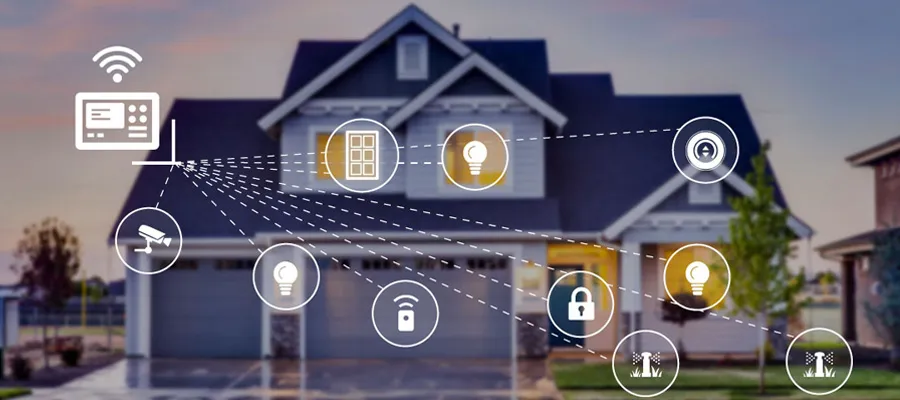
In a few short years, smart home technology has rapidly shifted how people live, work, and interact with their environment. The next decade, with accelerating digital innovation at its side, will continue to fashion an increasingly advanced and intuitive ecosystem in the home-from intelligent appliances to predictive automation, the future of smart homes centers around convenience, efficiency, and improving quality of life.
1. Seamless AI Integration
In the future, smart homes will involve Artificial Intelligence in an even bigger way. AI systems will extend their capabilities from simple voice commands to proactive assistants that predict users’ needs. Instead of commanding devices to lower the temperature or dim the lights, one day, homeowners may live in homes that automatically respond due to daily habits, emotional cues, or even preferences. It is here that machine learning will enable devices to make sense of complex patterns and predict requests that could optimize energy use with no human intervention.
2. Advanced Home Automation
Automation will be even smarter, and it will go beyond simple routines. Homes over the next ten years will have synchronized systems: appliances, lighting, heating, entertainment, and security connected in one system. For example, morning routines could trigger a chain of automated responses: the blinds open, the coffee is brewed, the thermostat changes, and news streams-all without anyone touching a button. This higher level of automation will create smoother, more efficient living experiences.
3. Sustainability and improved energy efficiency
Therefore, the smart home of the future will have technologies that reduce environmental impact amidst increasing global awareness of sustainability. It may comprise an intelligent power grid integrated with solar systems, and other devices analyzing consumption in real-time. Homeowners will gain more insight into their carbon footprint and data-driven recommendations for waste reduction. Smart thermostats, water-saving systems, and energy-monitoring appliances will become a mainstay of sustainable home design.

4. Improved Security and Privacy
The security of smart homes will continue to improve. Instead of cameras and sensors, future homes will feature biometric authentication, AI-enabled threat detection, and encryption of communication. These will enhance privacy while offering quicker response possibilities to any impending threats. Homeowners will get instant alerts based on behavior analysis with advanced protection against any form of cyber threats, intrusions, and unauthorized accesses.
5. Interconnected Wellness and Health Monitoring
In the years to come, health-oriented smart home features will become the norm as wellness technology advances. For example, homes can be equipped with environmental sensors that track air quality, humidity, and allergens, which would automatically adjust all systems to create a healthy living environment. Besides, integrated health monitoring devices may connect with medical platforms that provide warnings of abnormal patterns in sleep, heart rate, and activity levels. To many people, the future smart home may well be their personal wellness center.
6. Immersive Entertainment and Connectivity
Places of entertainment will also receive a facelift with improvements in virtual reality, augmented reality, and high-speed internet. Gaming rooms, remote work facilities, and virtual social interactions could be an integral part of the homes. Content consumption will also be quicker, smoother, and interactive with increased cloud computing.
Conclusion
The coming decade will redefine what modern living really means. With homes being smarter, more sustainable, and responsive, immediate benefits of convenience are going to make way for healthy lifestyles and even safer environs. To those interested in comfort and further efficiency, the future of smart homes is excitingly turning toward a world that is more connected and intuitive.


